
The Ultimate Guide to
Midcentury Modern Renovations
How to Honor the Past While Making Room for Your Future

Why Mid-Century Still Matters
If, when you hear “mid-century,” you think of a cantilevered glass box overlooking a sprawling California cityscape, you’re in exactly the right era, but you’re a bit too niched. Mid-century is also quintessentially Midwestern, where modest scale and honest materials feel right at home (and honestly, a little more attainable than those Case Study houses we all swoon over). Built between the 1940s and 1970s, these homes were designed with optimism and practicality: open spaces for gathering, large windows for letting in the good light, and natural materials like wood, brick, stone, and—if you're really lucky—some gorgeous terrazzo.
Mid-century homes feel as relevant today as when they were built, and families fall for them for many of the same reasons the original owners did: that optimistic spirit is contagious. But (and there's always a but), layouts that once felt fresh can now feel choppy, 75-year-old kitchens may not keep pace with the way we actually live now, and materials from all those decades ago likely need more than a little TLC. Renovating a mid-century home means finding that sweet spot between honoring its history and creating spaces that work for the way you live now.
At Susan Yeley Homes, we've helped families in Indiana and beyond reimagine mid-century spaces, preserving their character while layering in warmth, function, and personality (and often a healthy dose of color). This guide will walk you through the essentials: what makes a home mid-century, how to tackle those loveable quirks that sometimes need tweaking, and room-by-room ideas that'll make you fall in love with your home all over again.


What Defines a Mid-Century Modern Home?
Why These Houses Hit Different
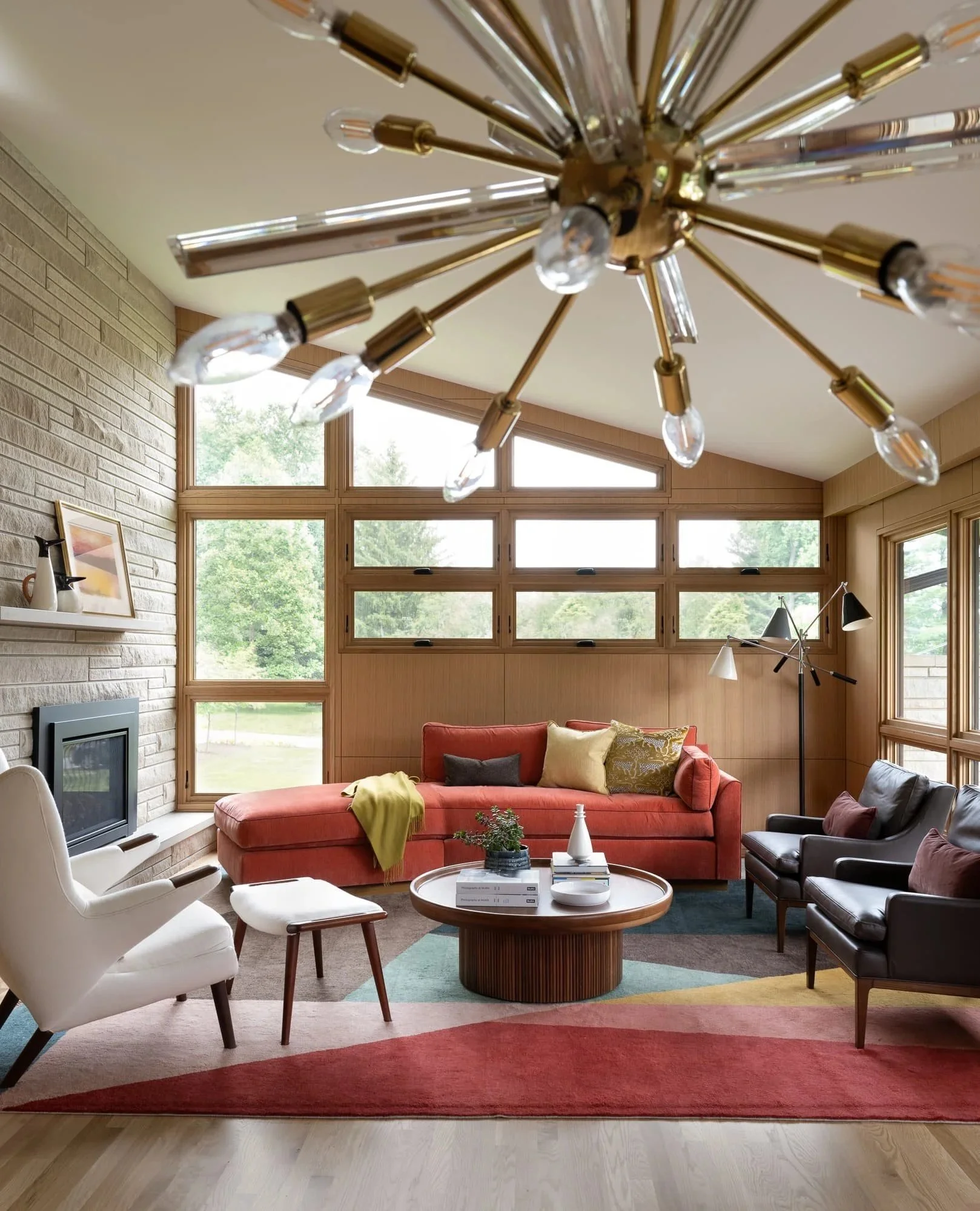
Like obscenity, you know a mid-century modern home when you see one. But what exactly gives these homes that unmistakable "I belong in an Atomic Ranch spread" character? Here are a few hallmarks that make our design hearts skip a beat.
Open, flowing layouts. Many mid-century homes feature wide living spaces and thoughtful connections between rooms—because life is better when you can chat with someone in the kitchen while folding laundry in the living room. Revolutionary concept, right?
Connection to the outdoors. Big picture windows, sliding glass doors, and patios that actually make sense, blur the line between inside and out. These architects understood that nature is the best artwork you'll ever have.
Natural materials. Stone fireplaces, wood paneling (the good kind, not the basement rec room kind), and brick walls create warmth and texture that no amount of paint can replicate. There's something so honest about materials that look like what they actually are.
Simple lines. No fuss, no frills, no unnecessary flourishes—just clean silhouettes that somehow manage to feel both timeless and totally of-the-moment. It's minimalism, but the cozy kind.
Practical scale. These homes were built for real life, with modest square footage that makes every design decision count. When you can't rely on sheer size to impress, you have to get really smart about how spaces work.
In Bloomington and across the Midwest, mid-century homes often come in the form of limestone ranches (hello, iconic local stone), split-levels, and quad-levels—each with their own quirks and opportunities for remodeling. Some have been lovingly maintained by owners who truly understood what they had; others are diamonds in the rough, just waiting for someone to see their potential and give them the love they deserve.
Common Renovation Challenges
The Loveable Quirks (That Sometimes Need Tweaking)
As much as we adore mid-century modern homes (and we really, really do), they aren't without their quirks. Renovating a mid-century is like solving a vintage puzzle you picked up at the History Center sale. It still has many of the pieces of a beautiful, complete image, but a handful are, more often than not, missing or mangled.
Kitchens that weren't made for gathering Many mid-century kitchens were designed for efficiency, not conversation, back when cooking was a solo sport and everyone gathered in the living room waiting for the Mrs. to announce that dinner was served. Closed-off layouts, limited counterspace, and minimal storage can make them feel more like airplane galleys than the heart of the home. The good news? Opening walls, rethinking cabinetry, and bringing in more natural light can turn these hardworking spaces into welcoming hubs for the 21st-century family.
Rooms that feel chopped up Split-levels and quads (bless their quirky hearts) often divide living spaces in ways that no longer suit how families spend time together. Finding creative ways to connect these spaces—or, in some cases, embracing their separation and making each zone feel intentional—makes all the difference between "Why are we shouting across levels?" and "Oh, this actually works beautifully."
Outdated or mismatched materials Shag carpet over hardwood (why?!), laminate countertops that fooled no one, or tired veneer paneling that was never the nicest stuff: mid-century homes sometimes carry layers of well-intentioned but misguided, quick and affordable fixes from the past. Part of the renovation process (and honestly, one of the most satisfying parts) is uncovering what's worth saving and thoughtfully replacing what's not. You'd be amazed what treasures might be hiding under that orange carpet.
Windows that need attention Big picture windows are absolutely iconic mid-century features, and we're here for every square inch of them. But let's be real: original single-pane glass isn't exactly energy efficient by today's standards. Replacing or restoring windows while keeping the home's character intact is one of the most important (and ultimately rewarding) updates you can make. The most notable of mid-century architects agree: nothing should come between you and the view of the outdoors just beyond your windows.
Design Principles for Renovating Mid-Century Modern Homes
How to Love What You've Got (While Making It Work Better)
The beauty of a mid-century renovation is that you don't have to erase the past to make room for the future—which is lucky, because frankly, they don't make stone fireplaces like they used to. In fact, the best updates highlight what's already there while introducing modern comfort and function. Think of it as giving your home some really good Botox and fillers, but not a complete facelift. A few guiding principles shape every project we take on.
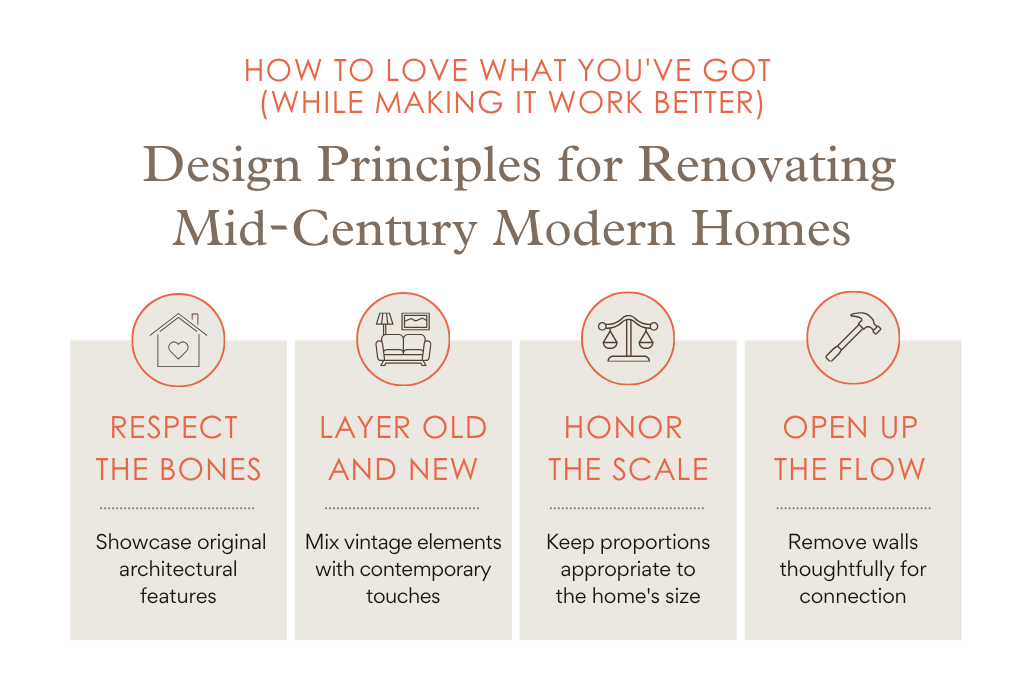
Respect the bones Stone fireplaces, good wood paneling, exposed beams, expanses of windows: these elements tell your home's origin story, and if you’ve got them, you know it's a good one. Rather than covering them up (please don't paint that beautiful brick!), we look for ways to showcase and balance them with fresh finishes and thoughtful context. When you've got good bones, show them off.
Layer old and new A mid-century house shouldn't feel like a time capsule where you're afraid to touch anything. We're going for modern spaces that feel alive and livable, not untouchable museum vibes. Pair vintage features (the brick wall or original built-ins) with right-now touches like bold tile, ample and well-placed lighting, or playful pops of color. The contrast doesn't fight; it makes everything more interesting.
Honor the scale Mid-century homes were built for real people, not massive sectionals and 10’ kitchen islands. To ensure coherence and intentionality in your renovation, keep scale in mind when you choose new fixtures and finishes. When everything's properly proportioned, small spaces can feel generous and, honestly, unnecessarily large spaces feel wasteful.
Open up the flow Let's be honest, some of the room divisions that made sense in 1962 are head-scratchers now. Where walls feel restrictive, a thoughtful opening can create connection without losing the cozy intimacy. The goal isn't to make every space wide open— nobody wants to live in an airplane hangar—but to encourage conversation and natural movement between the spaces you use most.
Room-by-Room Renovation Ideas
Your Guide to Making Every Corner Count
One of the joys of mid-century homes is that each space offers its own delightful opportunities—and yes, sometimes its own puzzles to solve. Here's how we think about updating the rooms families use every day.
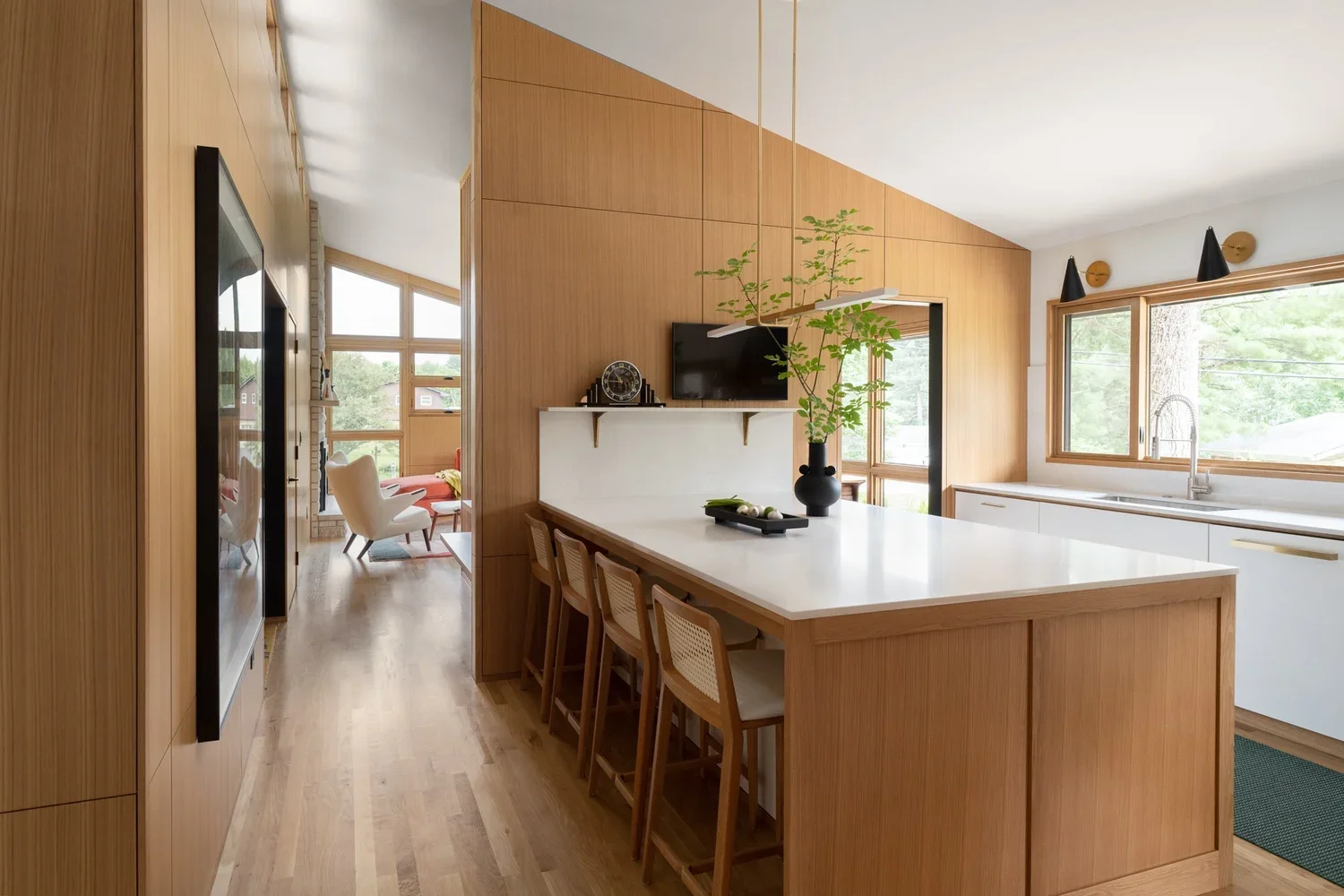
Kitchens: the new heart of the home Mid-century kitchens were practical but rarely social; meal time was simply a more formal affair back then, and kitchen design too often reinforced constrictive gender roles. Remodeling gives us a chance to free the mid-century matriarch, if only in memoriam. Depending on the space and the desires of the homeowners, that might mean opening up the kitchen to the dining or living area, adding islands for prep and gathering, or spicing up the cabinetry for more personality as well as functionality. Meanwhile, colorful tile or unexpected hardware can nod to the mid-century era without making your kitchen feel like a museum exhibit.
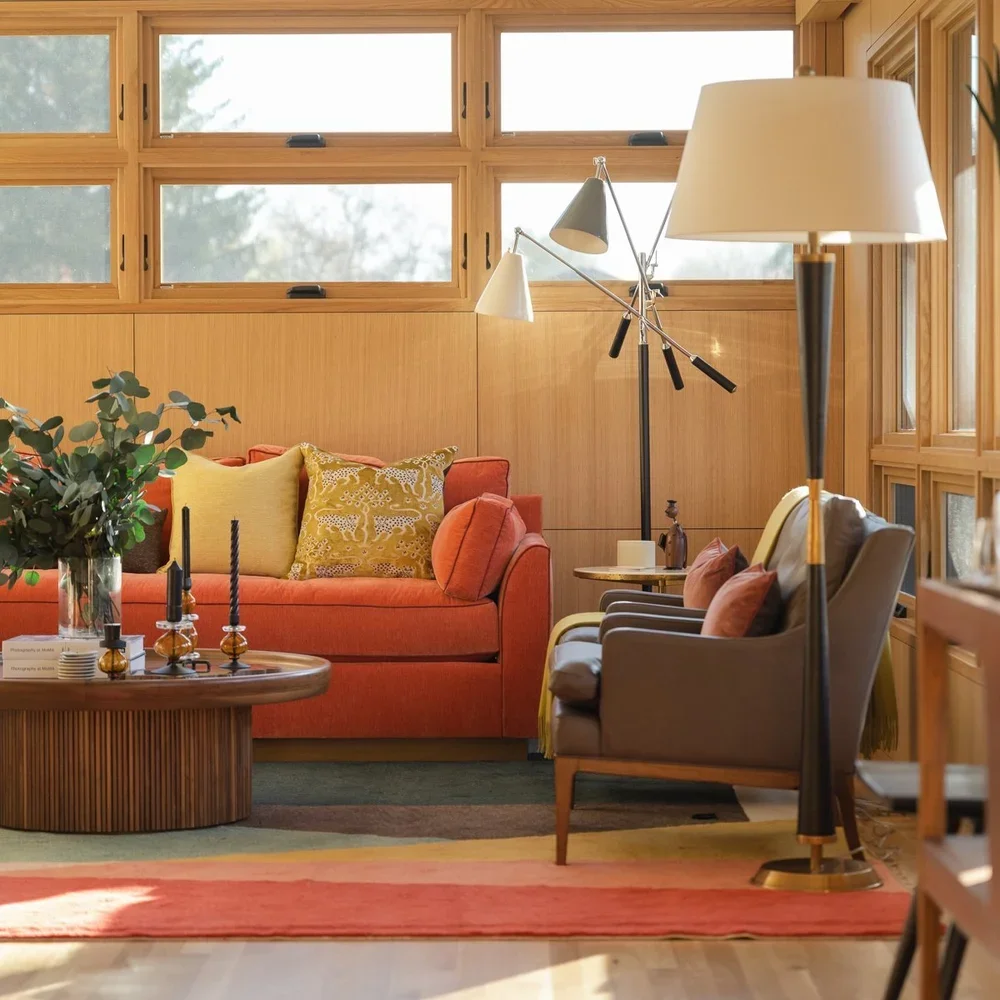
Living rooms: anchor the space A fireplace is often the centerpiece of a mid-century home—a relic of an era in which people talked to each other to pass the time. Instead of replacing them (why would you?), we emphasize them with fresh stonework if needed, curated art and streamlined mantels, and modern lighting that shows them off. Furniture should be arranged to include the fire in the conversation. If you insert a television, please try your best to make it recede rather than overwhelm, and do everything you can not to hang it over the fireplace. Large windows can be highlighted with simple treatments that frame views and bring the outdoors in. The view of a big backyard maple tree counts as art every time.
Bedrooms: simple and warm Mid-century bedrooms were generally streamlined and simple, with lots of built-ins and basic, practical textiles and furniture. Thus, a 21st-century mid-century bedroom should be uncluttered; think serene retreat, not storage unit. Updating closets (because let's face it, 1960s closets weren't built for today's wardrobes), adding layered textiles, and using warm wood accents create calm, personal spaces where you'll want to linger. Built-ins and window seats can maximize modest footprints while adding a custom touch.
Bathrooms: modern function, vintage charm Small mid-century bathrooms can shine with thoughtful updates. Patterned tile floors make a statement; floating vanities store all the things without crowding the space; light fixtures with all the right kelvins, lumens and CRIs make morning routines a little more joyful. Whether your new palette is simple or layered, neutral or bold, a bathroom renovated to be clean and functional never goes out of style.
Exteriors: curb appeal with a modern edge Flat or low-sloped roofs, asymmetrical lines, and wide façades define many mid-century exteriors—and we love them for it. (Except for flat roofs in snowy climates: honestly, don’t do it. Love the look; hate the leaks.) Fresh paint in the right colors, restored stone (shoutout to Indiana limestone), thoughtful new landscaping, and modern house numbers can transform curb appeal while staying true to your home's roots. First impressions matter, even for houses built in 1965.
Real-Life Renovations: Susan Yeley Homes Projects
The Good Stuff (Real Projects from Real Families)
No two mid-century homes are alike—which is one of the things we love about them. Some need a complete reimagining, while others just need someone to see their potential and give them a little love. Here are a few of our favorites from the Susan Yeley Homes portfolio (although it’s true what we say, picking favorites among our projects is like choosing between children).
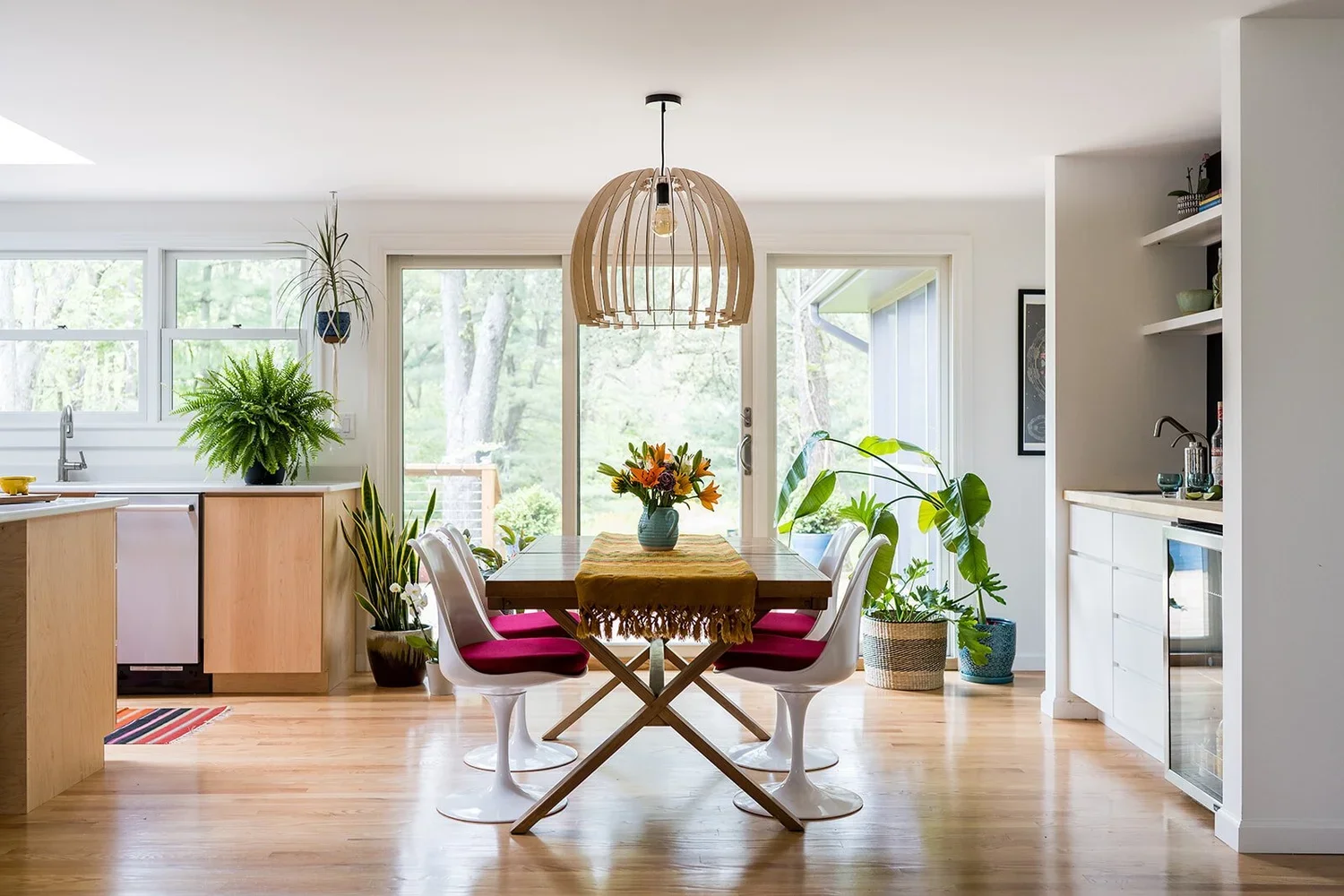
Mid-Century Marvel Our most comprehensive mid-century project to date, this Bloomington home was completely transformed, inside and out. It is our favorite kind of project—the kind where we get to play with everything from flow and finishes to furnishings, fabrics and fine art. We opened up the kitchen, reworked a recent addition, layered antiques with new and custom pieces, emphasized texture and light. We celebrated and maximized the vaulted ceilings and expansive windows (seriously, the light in this house!) and bowed to the original limestone, leaving it utterly untouched. We created a home in a mid-century shell that feels both thoroughly modern and completely true to its 1958 roots. If you think it looks good in the pictures, you should feel the palpable warmth when you are actually in it.
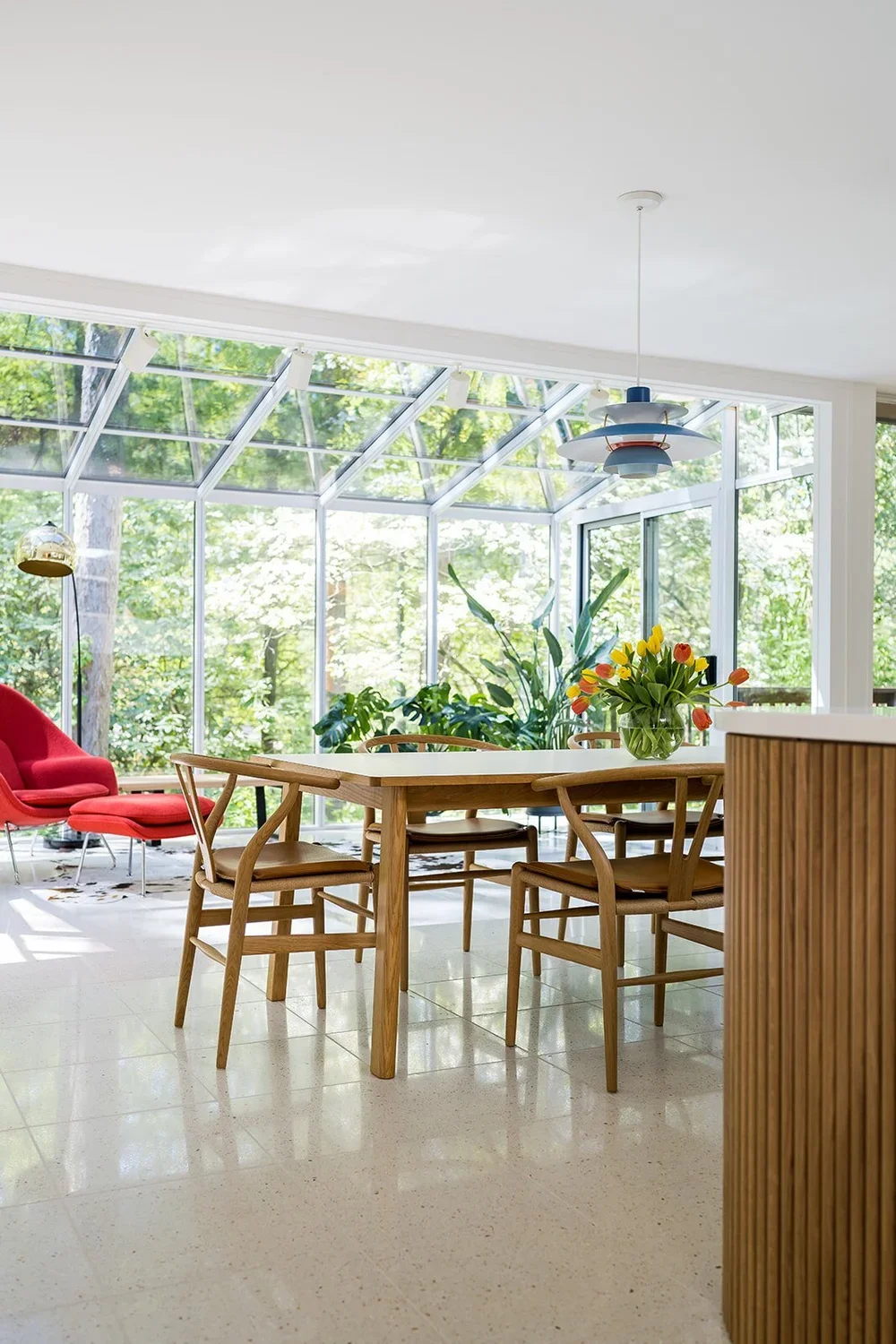
Atrium House This Earl Flansburgh–designed mid-century gem proves that even the best architectural specimens from the past are just that—from the past. We just think about kitchens differently now than we did half a century ago. In this classic 1970 layout, every room wrapped beautifully around a central atrium and also looked out beyond the box to the lovely wooded lot—every room, that is except the galley kitchen, which got the shaft with narrow doorways and obstructed views. We opened up walls but kept the kitchen contained, a Captain’s spot for a single chef, as requested by the client. We also kept the home's bold personality, including those stunning red, orange, and yellow closet doors. White terrazzo floors anchor custom plywood and black cabinetry, while a half-wall hides cooking chaos behind seamless oak tambour. A classic PH 5 pendant elevates the floating dining table, surrounded by iconic Wishbone chairs. Perhaps the best part? The glass sunroom that pushes this kitchen-dining right out into the woods. It’s the Midwestern answer to indoor-outdoor living, minus the mosquitoes. With our thoughtful updates, this (mostly) timeless home is ready for the next generation.
Classic Indiana Limestone Ranch This ranch had some of the best elements of modest mid-century design–low-slung, cozy, single-level living, local limestone, and an efficient footprint. That said, with tiny windows and a U-shaped, one-person kitchen sans dishwasher, it needed serious help with function and flow. We refreshed the kitchen so the homeowners could cook and hang out at the same time, connected the living areas to each other and to the beautiful backyard, and balanced the strong limestone façade with warm but simple modern finishes. The result feels collected, not decorated, and ready for the next generation of living.
Hi-Level Bi-Level Split-levels come with quirks (we've mentioned this), but this renovation proves they can absolutely work for modern families. In this bilevel, we opened up the common space but kept structural supports intact to divide zones as well as hold the roof and HVAC systems. Color, art, and pattern set against a bright white and warm walnut backdrop bring personality back into rooms that had gone beige. This home proves that even the trickiest floor plans can become welcoming, flexible spaces for modern living: natural light shines in from clerestory windows, and the new spaces connect people to each other and the outdoors.


![midcentury-marvel-lounge-design-indiana[1].jpg](https://images.squarespace-cdn.com/content/v1/52136342e4b0dc0738671f11/b364237f-850d-448d-8a5f-5e0119f74c41/midcentury-marvel-lounge-design-indiana%5B1%5D.jpg)




Renovating for Today’s Families
Making Mid-Century Work for the 2020s and Beyond
Mid-century homes were designed with family life in mind, but let's be honest: the way we live today looks a little different than it did in 1965. (Back then, nobody needed to charge six devices at once or find a place for the kids' soccer cleats.) Renovations must focus on adapting these beloved homes for modern needs while keeping their personality intact. After all, mid-century charm is why you fell in love with your house in the first place.
Spaces that multitask Open living areas are perfect for layering in flexible zones that work overtime—a corner for a home office that doesn't scream "I work from my dining room," built-ins that double as storage and display for all the beautiful things you've collected, or a dining space that seamlessly shifts from Homework Central on a weeknight to dinner party perfection on a Saturday. It's all about spaces that adapt to your life, not the other way around.
Smarter entries and mudrooms Original mid-century homes didn't plan for sports gear, hundreds of water bottles, online shopping deliveries, or electronic devices everywhere. Adding rooms designated to contain the mud or do the laundry, and carving out intentional entryways and charging stations, makes everyday life flow more smoothly and keeps common spaces feeling uncluttered. Nobody wants to step over cleats in the living room, no matter how stylish your house is.
Balancing personality with practicality Bold tile, statement lighting, or pops of color can reflect your style and make your heart happy every day—but pairing them with durable surfaces and timeless finishes ensures a space works as hard as it looks good. Think beautiful AND bulletproof. Real life happens in your home; plan for it..
Sustainability choices Updating windows, insulation, and appliances makes mid-century homes more energy-efficient without losing an ounce of character. Choosing natural materials—stone, wood, tile—also respects the original ethos of mid-century design while being kind to the planet. It's what those forward-thinking 1960s architects would want, honestly.
Explore how our Services can help you reimagine your own mid-century home.


Planning Your Own Mid-Century Renovation
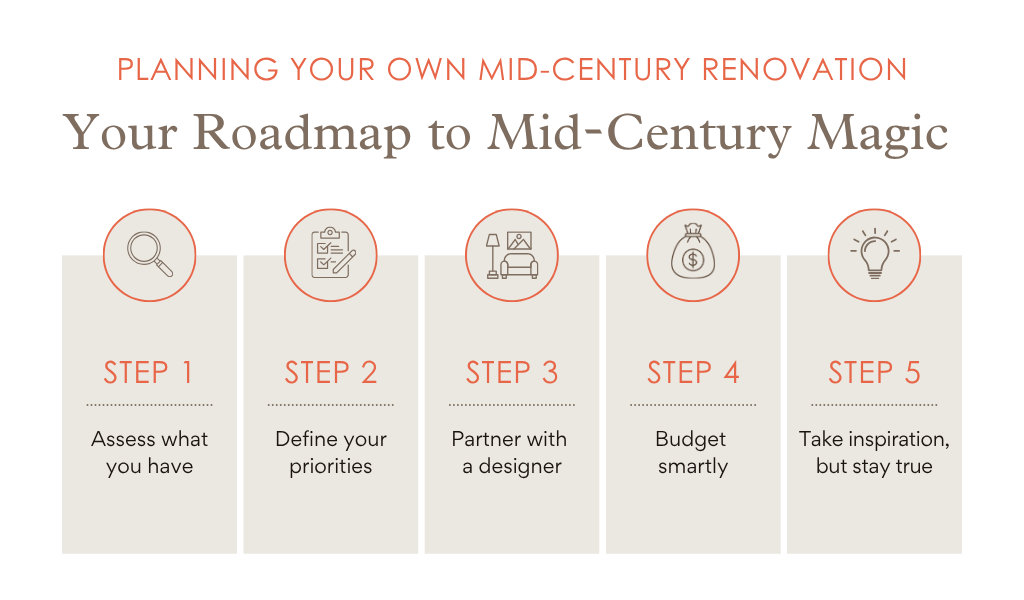
Your Roadmap to Mid-Century Magic
If you're ready to take on a mid-century renovation, a thoughtful plan and a solid team make all the difference between "this is going beautifully" and "why did we think we could do this?" Here's how we recommend approaching it—learned from years of helping families fall back in love with their homes.
Step 1: Assess what you have. Start by walking through your home with fresh eyes. Pretend you're seeing it for the first time. What original features make your heart skip a beat? What feels dated, cramped, grimey, or just plain impractical for how you live? Knowing what to keep—and what needs to go—sets the foundation for every decision that follows. Pro tip: make two lists. Be honest about both.
Step 2: Define your priorities. Is the kitchen driving you crazy every single day? Do you desperately need more light, more storage, or better flow between spaces? Or is the whole family sharing one bathroom because the other is failing in some way that you’ve just not had time to fix? Clarifying your "must-haves" early helps guide the design process and keeps the budget from running away with itself. Everything can feel pressing in an older home, but organizing your thoughts and needs allows you to be clear about where to start.
Step 3: Partner with a designer. Working with a design team makes the money you invest in your home go further, because you get both style and function right, the first time. Don’t you want an A+ rather than a B to show for your outlay of energy, finances, and time? ). We help homeowners find solutions that fit their family, their budget, and their home's architectural story. Think of us as translators between what you dream about and what's possible.
Step 4: Budget smartly. Splurge where it matters, be it windows, structural updates, or quality finishes that you'll touch and see every day, and save on elements that matter less to you or can be updated later when inspiration (or funds) strike. Mid-century homes often benefit from a phased approach if you're balancing long-term dreams with short-term realities. Rome wasn't built in a day, and neither must your perfect home be.
Step 5: Take inspiration, but stay true. Magazines and Pinterest boards can absolutely spark ideas (we love them too!), but the most successful renovations stay rooted in the particular homeowner’s and home's character. A mid-century house doesn't need to copy the past; rather, it should respect it while making room for your life, your style, and your family's story.
Ready to Fall in Love With Your Home All Over Again?
Because That's What Good Renovations Do
Mid-century homes have a timeless appeal that just doesn't quit: clean lines, natural materials, and a sense of optimism built right into their walls. With the right renovation approach, one that honors what's special while making everything work better, they can feel just as fresh and functional today as they did the day they were built–maybe even better, because the updates will be informed by your unique needs and lifestyle.
Whether you're opening up a split-level that's been chopped into too many pieces, refreshing a ranch that needs to shine again, or giving a 1960s kitchen the bold new personality it's been waiting for, thoughtful updates ensure your home tells its story and serves your family beautifully for years to come. Mid-century houses were built to last, and with a little love, they absolutely can.
At Susan Yeley Homes, we believe every renovation should feel personal, practical, and true to the spirit of the house (because honestly, what's the point otherwise?). We're not here to impose our style on your home; we're here to help your home become the best version of itself. If you're ready to start planning your own mid-century project, we'd love to help you fall in love with your house all over again.


